Source cereal grains grain filling machine for Tea Rice Flour
Compare 30 listings for the cereal grains grain filling machine with features like automatic grade, pneumatic drive, and PLC control. These units support filling ranges from 100 to 980ml and offer bag widths up to 145mm for various packaging needs.
Key considerations
Products List




Comprehensive Sourcing Guide
Strategic Sourcing Guide for Cereal Grains and Grain Filling Machines
Understanding the Technical Landscape of Grain Filling Equipment
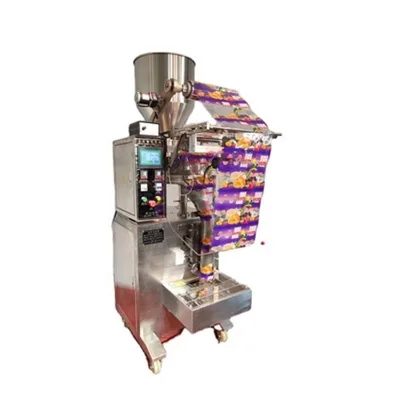
When sourcing machinery specifically for cereal grains, buyers must navigate a complex landscape where the physical properties of the product dictate the machine's mechanical design. The core keyword "cereal grains grain filling machine" implies a need for equipment capable of handling granular, powdery, or pelleted materials with high precision. Based on observed market data, these machines are often categorized by their automatic grade, which ranges from fully automatic to semi-automatic configurations. The distinction is critical because the "Automatic Grade" determines the level of human intervention required during the filling cycle. Fully automatic units typically integrate forming, filling, and sealing into a single continuous process, whereas semi-automatic models may require manual bag placement or positioning.
The mechanical architecture of these machines often relies on specific core components to ensure reliability. The motor is a central element, driving the various actuators and conveyors necessary for operation. In many high-performance units, the driven type is pneumatic, utilizing compressed air to operate valves and seals, which offers a clean and responsive mechanism suitable for food-grade environments. The power consumption for such industrial units typically centers around 2.5kw, operating on standard power supplies like AC220V/50HZ or 110V depending on the regional electrical infrastructure. Buyers must verify the voltage compatibility of the specific unit against their facility's power grid to prevent operational failures.
The physical dimensions of the machinery are substantial, with observed specifications indicating a footprint of approximately 12209002000mm. This size accommodates the internal mechanisms required for bag forming and sealing. The weight of these units is significant, with observations noting weights around 350kg to 400kg, necessitating robust flooring and potentially specialized logistics for installation. The forming function is a key differentiator, with machines designed to handle specific bag types such as gusseted or pillow bags. The bag width and length are adjustable, with observed ranges spanning from 25mm to 145mm in width and 35mm to 145mm in length. This adjustability is often facilitated by quick change cartridges, allowing for rapid switching between different product sizes without extensive downtime.
Compliance, Certification, and Material Safety Standards
In the food processing sector, particularly for cereal grains, compliance with safety and material standards is non-negotiable. The primary concern is ensuring that the machine does not contaminate the product. A critical specification to verify is the "Material Contact" component. High-quality machines utilize Food Grade SS316L stainless steel for all parts that come into direct contact with the grain. This material resists corrosion and is easy to clean, meeting stringent hygiene requirements. Conversely, the external packaging or structural materials might differ; for instance, the machine's own packaging for shipping may involve wood or plywood boxes, but this does not affect the food-grade integrity of the machine itself.
While specific certification statuses like CE are often mentioned in broader market contexts, buyers should not assume a specific unit holds a certification without direct verification from the supplier. The absence of a guaranteed certification in the provided data means that procurement teams must explicitly request and validate any compliance documents. The "Video outgoing-inspection" feature is a valuable tool in this regard, allowing buyers to visually verify the build quality and safety mechanisms before shipment. This inspection should specifically check for the presence of safety mechanisms, such as dual emergency stops, which are essential for operator protection in high-speed environments.
The sealing method is another area where compliance impacts product integrity. Machines utilizing a four-side seam sealing method ensure a hermetic seal, which is vital for preserving the freshness of cereal grains and preventing pest infestation. The "Packaging Material" for the final product is often plastic, such as PP woven bags, paper bags, or PE bags. The machine must be compatible with these materials. The "Bag style" observed as a back side seal is a specific configuration that buyers must match with their existing packaging supply chain. Mismatches in bag style or material can lead to production stoppages and increased waste.
Cost Drivers and Pricing Dynamics in Grain Filling Systems
The pricing of grain filling machines is influenced by a multitude of factors, creating a wide variance in the market. Observed listed prices range significantly, from 500 USD to as high as 10,000,000 USD. This broad spectrum reflects differences in automation levels, brand reputation, material quality, and production capacity. A machine priced at the lower end of the spectrum is likely a semi-automatic unit with basic functionality, while high-end models featuring advanced PLC touch screen interfaces, high-precision sensors, and continuous high-output capabilities command premium prices.
The Minimum Order Quantity (MOQ) is another critical cost driver. The observed MOQ range spans from 1 to 3500 units. For small-scale operations or those testing a new production line, a low MOQ of 1 is advantageous. However, for large-scale industrial deployments, negotiating a lower unit price often requires meeting a higher volume threshold. The "Selling Units" are typically listed as single items, but the total cost of ownership includes the cost of spare parts, maintenance, and potential customization fees.
Customization is a significant factor in pricing. The "Customization" attribute is marked as available, meaning buyers can request modifications to the machine's dimensions, control systems, or bag handling capabilities. These customizations invariably increase the base cost and may extend the lead time. The "Production Capacity" is also a direct cost driver; units capable of 40 bags per minute or higher speeds, such as those with a packing speed of 30-76 bags per minute, require more sophisticated engineering and higher-grade components, thus increasing the purchase price. Buyers should balance the initial capital expenditure against the long-term efficiency gains provided by higher-speed, more automated machinery.
Typical Applications and Material Compatibility
The versatility of grain filling machines is evident in their wide range of applications. While the core keyword focuses on cereal grains, the observed "Application" attributes include tea, rice, and flour. This indicates that the machinery is designed to handle a variety of dry, granular, and powdery products. The "Applicable Material" list further expands to include granules, powders, pellets, and even cat litter, suggesting that the mechanical design is robust enough to handle diverse densities and flow characteristics.
The "Filling Material" is specified as liquid in some contexts, which may seem contradictory to the "cereal grains" focus. However, in a broader industrial context, this often refers to machines that can be configured for different product types or that handle liquid-based coatings or additives for grains. For pure grain applications, the machine must be equipped with the correct weighing technology. The "Weighing Technology" observed is the "High Precision Sensor," which is essential for maintaining accuracy when filling varying densities of grain. Inaccurate filling can lead to regulatory non-compliance regarding net weight and financial loss due to product giveaway.
The "Filling range" is another critical parameter for application matching. Observed ranges of 100-980ml suggest that these machines are suitable for a wide array of package sizes, from small retail packs to larger bulk containers. The "Forming Species" is identified as "Bag Moulding," meaning the machine can create the bag from a roll of film or handle pre-made bags. This flexibility allows buyers to choose between cost-effective pre-made bags or custom-formed bags depending on their branding and logistics needs. The "Packing" type is generally a bag, and the "Packaging type" is film, reinforcing the focus on flexible packaging solutions common in the food industry.
Supplier Evaluation and Operational Reliability
Evaluating a supplier for grain filling machinery requires a rigorous assessment of their technical capabilities and after-sales support. The "Brand name" Hengli is observed in the data, serving as an example of a known entity in the market, but buyers should not limit their search to a single brand. Instead, they should focus on the supplier's ability to provide "Video outgoing-inspection," which serves as a proxy for transparency and quality control. This visual verification allows buyers to confirm that the machine matches the described specifications before it leaves the factory.
The "Place of origin" is listed as Guangdong, China (Mainland) and Fujian, indicating that the majority of these machines are manufactured in specific industrial hubs in China. Buyers should verify the specific factory location to assess the logistics and potential tariffs associated with importing. The "Production capacity" of the supplier, noted as 40 bags/min in some contexts, refers to the machine's output, but the supplier's own manufacturing capacity is equally important for meeting delivery deadlines.
Reliability is often tied to the "Control System." Machines equipped with a "PLC Touch Screen Interface" offer greater ease of operation and troubleshooting capabilities compared to older relay-based systems. The "Key selling points" often include "Easy To Operate," which is crucial for reducing training time and minimizing operator error. Buyers should test the interface during the inspection phase to ensure it is intuitive and responsive. The "Warranty" period of 1 Year is a standard baseline; however, buyers should negotiate for extended warranties or comprehensive service packages to mitigate the risk of downtime.
Quality Control and Long-Term Procurement Considerations
Quality control in the procurement of grain filling machines extends beyond the initial purchase. The "Sealing Method" of four-side seam sealing must be tested for consistency to ensure product integrity over the machine's lifespan. The "Bag width" and "Bag length" adjustments should be tested for precision, as misalignment can lead to sealing failures. The "Weight" of the machine, observed at 350kg to 400kg, suggests a heavy-duty build, but buyers should verify the stability of the frame to prevent vibration issues during high-speed operation.
Long-term procurement considerations involve the availability of spare parts and the durability of the "Core components" like the motor. The "Power Consumption" of 2.5kw is a standard metric, but energy efficiency can vary based on the machine's condition and usage patterns. Buyers should inquire about the expected lifespan of critical components and the cost of replacement parts. The "Packing speed" of 30-76 bags per minute is dependent on the material and bag size; therefore, buyers should request performance data specific to their intended product to ensure the machine meets their throughput requirements.
Finally, the "Customization" availability offers a path to future-proofing the investment. As product lines evolve, the ability to adjust the machine for new bag sizes or materials is invaluable. The "Size Adjustment" via "Quick Change Cartridge" is a feature that supports this flexibility. Buyers should ensure that the customization process is well-documented and that the supplier provides adequate training on how to perform these adjustments. By focusing on these technical and operational details, buyers can secure a reliable, efficient, and compliant grain filling machine that supports their long-term production goals.
FAQs
What is the filling range for this machine?
The filling range is 100 to 980 milliliters. This capacity allows the machine to handle various package sizes suitable for cereal grains, tea, rice, and flour applications effectively.
Which bag types does the machine support?
The machine supports gusseted and pillow bag types. It can process materials like PP woven bags, paper bags, and PE bags with a bag width ranging from 25 to 145 millimeters.
How fast can the machine pack products?
The packing speed ranges from 30 to 76 bags per minute. This speed varies depending on the specific material being used and the dimensions of the bag being filled.
Can the machine be customized for specific needs?
Yes, customization is available for this equipment. Buyers can request modifications to suit their specific production requirements while maintaining the core functionality of the filling and sealing process.
What is the warranty period for the machine?
The standard warranty period is one year. This coverage ensures protection against defects in materials and workmanship for the initial year of operation after purchase and installation.
What material is used for food contact parts?
Food contact parts are made of Food Grade SS316L stainless steel. This material ensures hygiene and corrosion resistance, meeting safety standards for processing cereal grains and other food products.
Where is the machine manufactured?
The machine originates from Guangdong, China (Mainland) or Fujian. These locations are known industrial hubs for manufacturing automated packaging machinery with verified production capabilities.